High heating bills during Missouri’s coldest months are often caused by a furnace working harder than necessary to keep your home warm. If your energy bills keep increasing even when your thermostat stays at the same temperature, you may need a Furnace Repair Service in Manchester, MO to identify the problem. Dirty air filters, poor insulation, leaking air ducts, and an inefficient heating system can all increase your monthly heating costs.
In Manchester, MO, winter temperatures can drop quickly, making your furnace run for longer periods. Understanding what causes high furnace energy bills can help you lower energy use, improve indoor comfort, and prevent unexpected heating problems.
1. A Dirty Furnace Air Filter
A dirty furnace filter is one of the most common reasons for higher heating bills. The filter collects dust, dirt, and other particles from the air. Over time, these materials can block airflow and make it harder for your furnace to heat your home.
When airflow is restricted, your heating system may run longer to reach the temperature set on your thermostat. This can increase energy consumption and put extra stress on furnace components.
How to fix it: Check your furnace filter regularly and replace it when it becomes dirty. Many standard filters need replacement every one to three months, but the correct schedule depends on the filter type, household conditions, and manufacturer recommendations.
2. Poor Furnace Maintenance
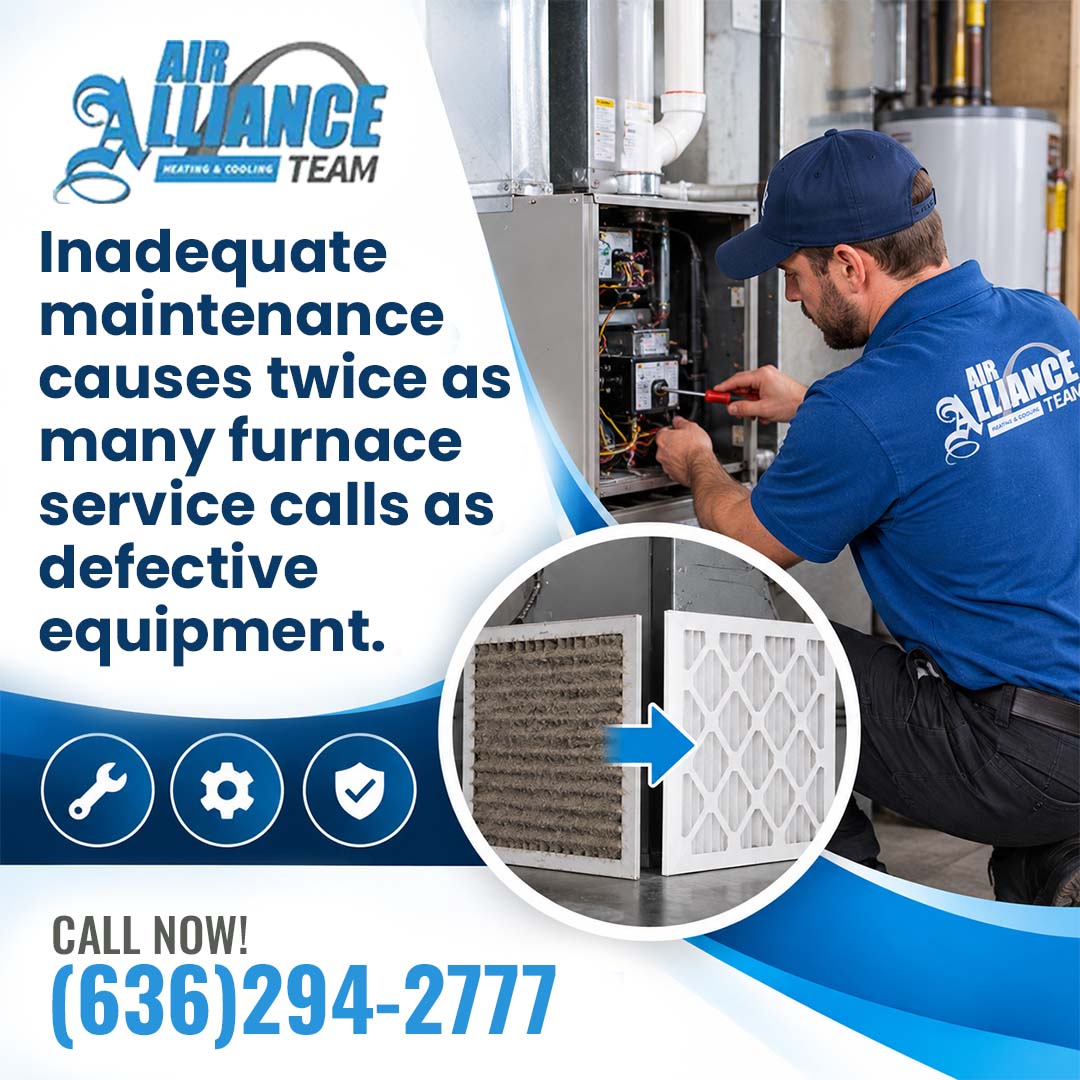
Skipping regular furnace maintenance can lead to higher energy bills during winter. Dust buildup, dirty components, restricted airflow, and worn parts can prevent your heating system from operating efficiently.
A professional furnace maintenance service can help identify these issues before they become expensive repairs. During a routine inspection, an HVAC technician can check important components, inspect electrical connections, verify safe operation, and look for signs of wear.
Regular heating system maintenance can also help reduce unexpected breakdowns during Missouri’s coldest weather.
How to fix it: Schedule annual furnace maintenance before the winter heating season begins. If your furnace is already making unusual noises, producing uneven heat, or struggling to maintain the desired temperature, arrange a professional inspection.
3. Leaking or Poorly Insulated Air Ducts
Your furnace can produce enough heat, but that heat may not reach every room efficiently. Leaking, damaged, or poorly insulated ductwork can allow heated air to escape before it reaches your living spaces.
This means your furnace may need to run longer to keep your home comfortable. You might notice that some rooms feel warm while others remain cold.
How to fix it: Check accessible ductwork for visible damage or disconnected sections. Have an HVAC contractor inspect the duct system if you suspect air leaks or uneven heating. Sealing duct leaks and improving insulation can help reduce energy waste.
4. Poor Home Insulation and Air Leaks
Even an efficient furnace cannot keep heating costs low if warm air constantly escapes from your home. Gaps around windows, doors, attic openings, and other areas allow cold outdoor air to enter.
During a Missouri cold snap, these air leaks can make your furnace run more frequently to maintain a comfortable indoor temperature.
How to fix it: Seal gaps around windows and doors, install weatherstripping where needed, and check attic insulation. Pay attention to rooms that feel colder than others, as they may have insulation problems or drafts.
Improving home insulation helps your heating system maintain indoor temperatures with less unnecessary energy use.
5. An Incorrect Thermostat Setting
Your thermostat controls when your furnace runs. Setting it much higher than necessary can increase heating costs, especially when outdoor temperatures are extremely low.
For example, raising the thermostat to 75°F when 68°F to 70°F feels comfortable may cause your furnace to use more energy than needed. The exact savings from adjusting your thermostat depend on your home, heating system, and outdoor conditions.
How to fix it: Choose a comfortable temperature and avoid making frequent, large adjustments. A programmable or smart thermostat can automatically lower the temperature when you are sleeping or away from home.
Make sure the thermostat is installed in a suitable location, away from direct sunlight, drafts, and other heat sources that could affect its readings.
6. An Aging or Inefficient Furnace
Older furnaces may use more energy to provide the same amount of heat as newer, more efficient systems. Over time, mechanical wear and outdated technology can also affect heating performance.
If your furnace runs constantly, needs frequent repairs, or produces uneven heat, it may be losing efficiency. However, an older furnace does not automatically need replacement. Maintenance, airflow problems, and other repairable issues should be checked first.
How to fix it: Ask a qualified HVAC contractor to evaluate your furnace’s condition, efficiency, repair history, and heating performance. If replacement makes sense, compare high-efficiency furnace options based on your home’s heating needs and installation costs.
7. Blocked Vents and Restricted Airflow
Closed, blocked, or obstructed supply and return vents can interfere with airflow throughout your home. Furniture, rugs, dust, and other objects may prevent heated air from circulating properly.
Restricted airflow can reduce comfort and may cause some furnaces to overheat or cycle off unexpectedly.
How to fix it: Keep supply and return vents clear of furniture and other obstructions. Avoid closing many vents in an attempt to save energy, because this can disrupt airflow and affect system performance.
If some rooms remain cold despite clear vents, an HVAC technician can investigate ductwork, airflow balance, and other possible causes.
8. Extremely Cold Missouri Weather
Sometimes, high furnace energy bills are partly the result of weather conditions rather than a furnace problem.
When outdoor temperatures fall sharply, your home loses heat more quickly. Your furnace must run longer to replace that lost heat and maintain the temperature you have selected.
During particularly cold periods in Manchester, MO, a noticeable increase in natural gas or electricity usage may be normal.
How to fix it: Keep doors and windows closed, seal drafts, use suitable window coverings, and maintain a reasonable thermostat setting. Compare your actual energy usage with previous months rather than looking only at the total bill, since utility rates can also change.
9. A Furnace That Is Short Cycling or Running Constantly
Short cycling occurs when your furnace turns on and off repeatedly without completing a normal heating cycle. A furnace that runs almost continuously may also indicate an underlying problem, although long operating periods can be normal during extreme cold.
Potential causes include a dirty filter, thermostat problems, restricted airflow, an oversized system, or equipment issues.
Both situations can affect comfort and may increase wear on the heating system.
How to fix it: Start by checking the air filter and making sure vents are unobstructed. If the problem continues, contact a professional HVAC contractor to diagnose the cause rather than repeatedly restarting the furnace or adjusting settings without understanding the issue.
How Can You Lower Furnace Energy Bills in Manchester, MO?
You can often reduce winter heating costs by combining simple home maintenance with professional HVAC care.
Replace dirty furnace filters, seal air leaks, improve attic insulation, and keep vents unobstructed. Use a programmable thermostat to manage indoor temperatures, and schedule regular furnace maintenance before temperatures drop.
It is also helpful to review your utility bills and compare monthly energy consumption. If your usage rises significantly without a clear change in weather or household habits, have your heating system inspected.
These steps can improve furnace efficiency, support reliable heating, and help prevent avoidable repairs during the winter season.
When Should You Call an HVAC Contractor?
Contact a qualified HVAC contractor if your furnace struggles to heat your home, makes unusual noises, cycles on and off frequently, or causes a sudden increase in energy usage that you cannot explain.
Professional furnace repair can help identify faulty components, airflow restrictions, thermostat problems, and other issues that may increase heating costs. If your system needs attention, addressing the problem early may prevent more serious damage.
If you smell gas, leave the building and contact your gas utility or emergency services from a safe location. If a carbon monoxide alarm sounds, get everyone outside immediately and call emergency services. Do not continue operating a potentially unsafe heating system.
Get Help With High Furnace Energy Bills in Manchester, MO
High furnace energy bills do not always mean you need a new heating system. Sometimes, a filter replacement, furnace tune-up, ductwork repair, or targeted furnace repair can address the underlying problem.
Air Alliance Team helps homeowners in Manchester, MO, with heating concerns and HVAC services. If your furnace is using more energy than usual or struggling to keep your home warm, a professional inspection can help you understand what is happening and determine the next steps.
Contact the Air Alliance Team to discuss your furnace concerns and schedule service.
Air Alliance Team
Location: Manchester, MO
Phone: (314) 433-5475
Email: info@airallianceteam.com
Website: https://airallianceteam.com/